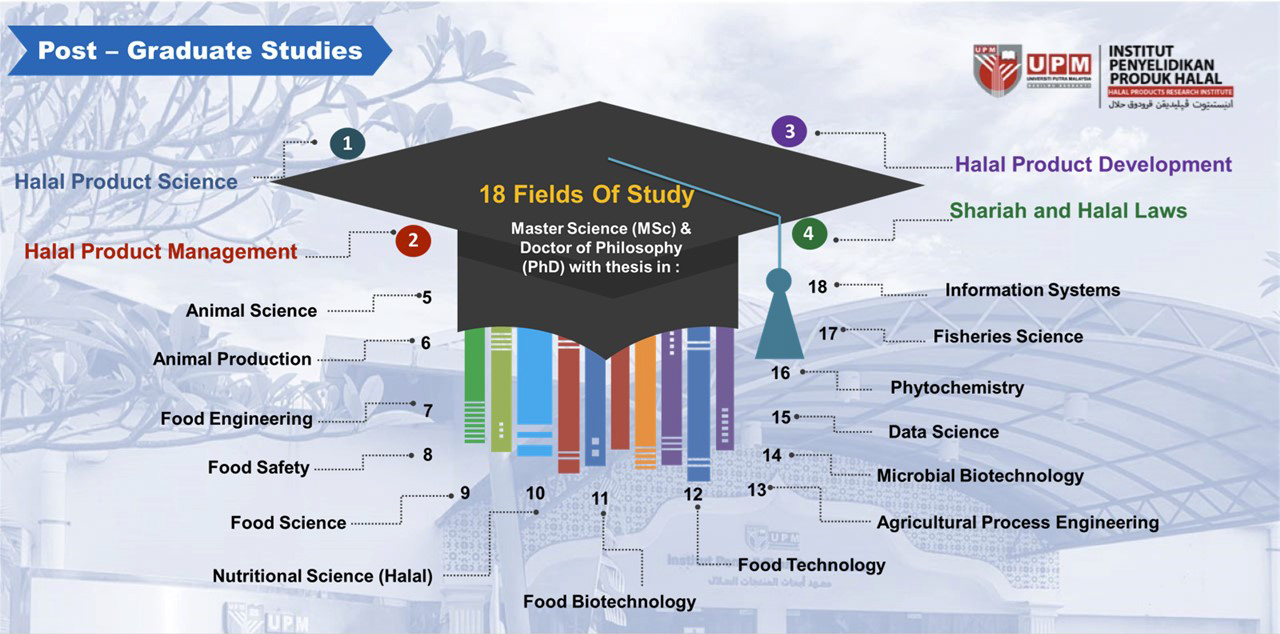
HALAL PRODUCTS SCIENCE
This field of study focuses on the research and development of scientific methods for the authentication, verification, detection, and monitoring of halal product integrity. It encompasses the development and validation of analytical methods using chromatography, spectroscopy, molecular biology, nanotechnology, proteomics, metabolomics, bioinformatics, as well as multi-omics and species profiling approaches. Research in this field strengthens the scientific basis for determining ingredient sources, slaughter status, cross-contamination, adulteration, raw material authenticity, and halal product integrity. In line with the concept of tayyiban, emphasis is also placed on product safety, hygiene, efficacy, nutritional benefits, and health impacts. The field further explores the application of technologies such as artificial intelligence (AI), the Internet of Things (IoT), data analytics, smart sensors, and scientific databases to enhance traceability, risk detection, rapid screening methods, and evidence-based halal compliance monitoring.
HALAL PRODUCTS DEVELOPMENT
This field of study focuses on the research, development, and commercialization of products and processes that comply with halal certification requirements for the food, pharmaceutical, cosmetic, and healthcare industries through technological and innovative approaches. Key areas include the development of halal products such as protein hydrolysates, halal enzymes, meat-based products, and alternative proteins. The field also covers the development of halal lipid-based ingredients, including emulsifiers, fat and oil replacers, and specialty fats. Emphasis is placed on developing new materials and products to optimize processing, formulation, and production for commercial application. Research further encompasses sensory evaluation, biotechnology, microbiology, fermentation, process validation, production scale-up, product safety and quality assurance, halal packaging, artificial intelligence (AI) applications, and sustainability and circular bioeconomy approaches to develop innovative and globally competitive halal products.
HALAL PRODUCTS MANAGEMENT
This field of study focuses on the business, management, and governance aspects of halal products, encompassing halal slaughtering, production, marketing, and halal supply chain management. Areas covered include strategic halal product management, operations, quality, logistics, international trade, marketing, promotion, finance and banking, consumer behaviour, as well as tourism and hospitality based on Islamic principles. The field also encompasses halal assurance systems, halal risk management, halal audit and certification, supplier integrity, crisis and product recall management, and compliance with halal standards, guidelines, and regulatory requirements at both local and international levels. The application of digital technologies such as artificial intelligence (AI), data analytics, and blockchain technology is emphasized to enhance traceability, supply chain integrity, halal compliance monitoring, data transparency, and consumer trust, thereby supporting efficient, transparent, and accountable halal governance.
SHARIAH AND HALAL LAWS
This field of study focuses on the Shariah, legal, and governance aspects related to the development, certification, and management of halal products. Areas covered include halal product law, fiqh and usul fiqh, fatwa management, principles of Islamic law, Islamic legal systems and administration, as well as international trade law, consumer protection, product liability, and product safety. The field also examines halal certification, enforcement, halal standards and guidelines, recognition of foreign halal certification bodies, and issues related to cross-border trade and international halal equivalency. Research in this area addresses contemporary Shariah and legal issues arising from technological advancements, product innovations, and the evolving global business environment. This field integrates Shariah principles, tayyiban values, integrity, accountability, and halal governance to ensure Shariah compliance and support the development of a sustainable and globally competitive halal ecosystem.
Updated:: 13/07/2026 [saidatulmaisarah]
MEDIA SHARING